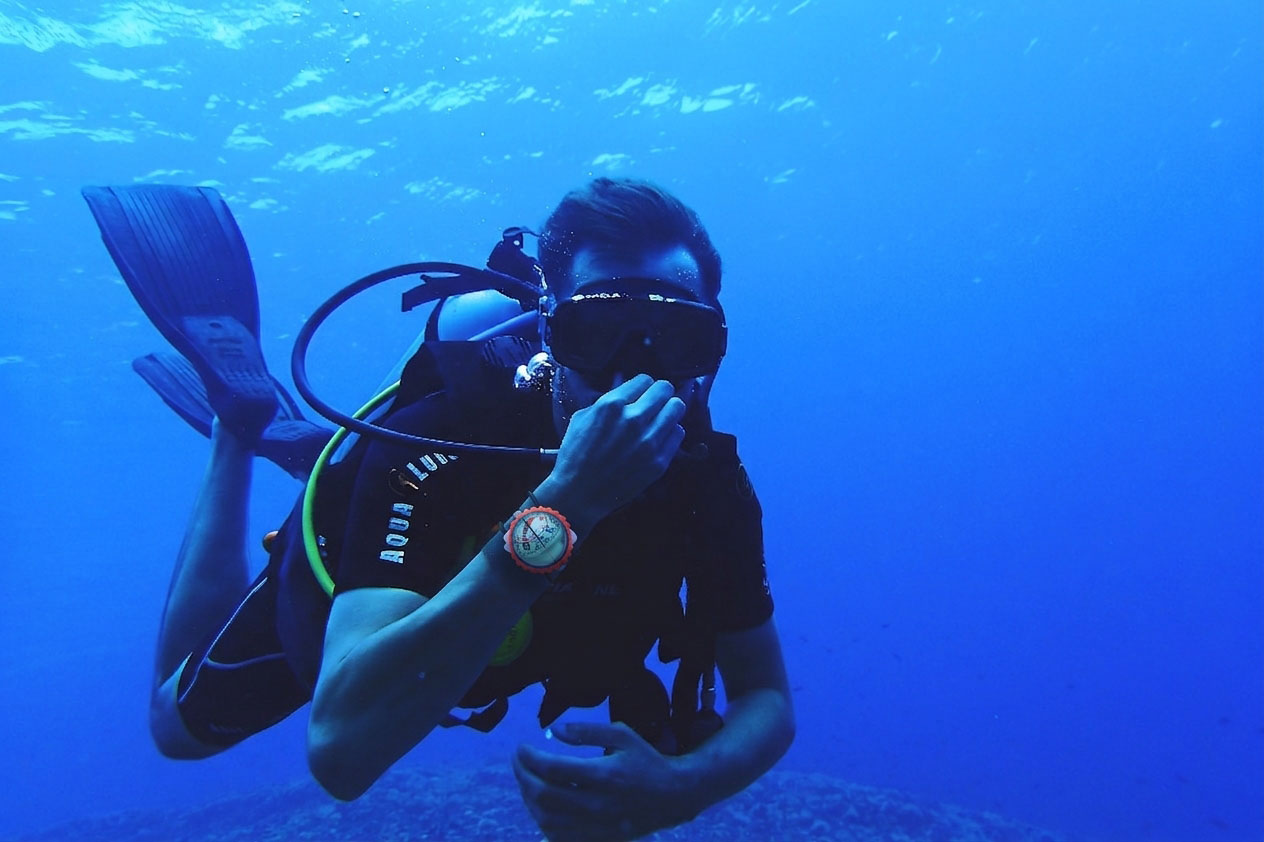
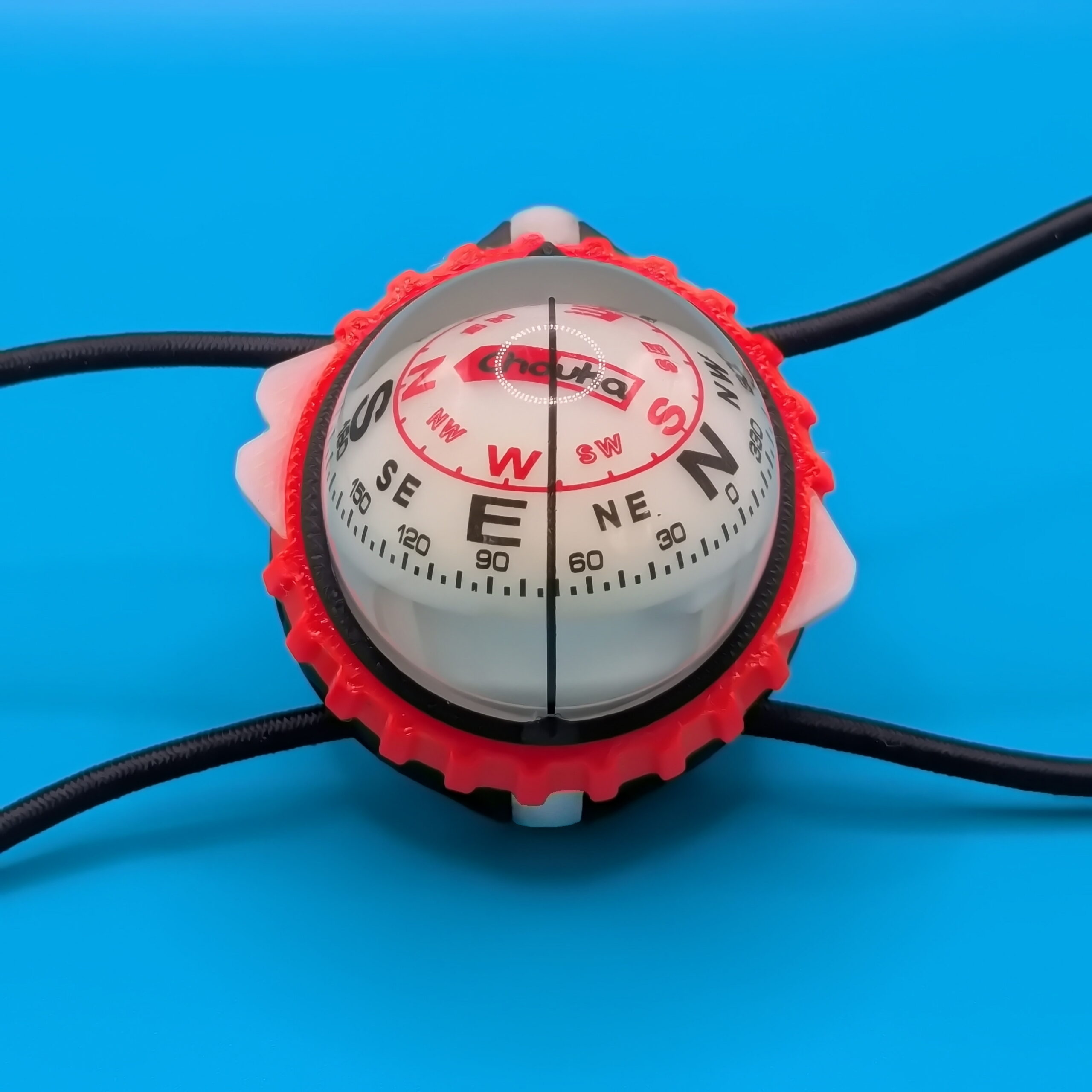
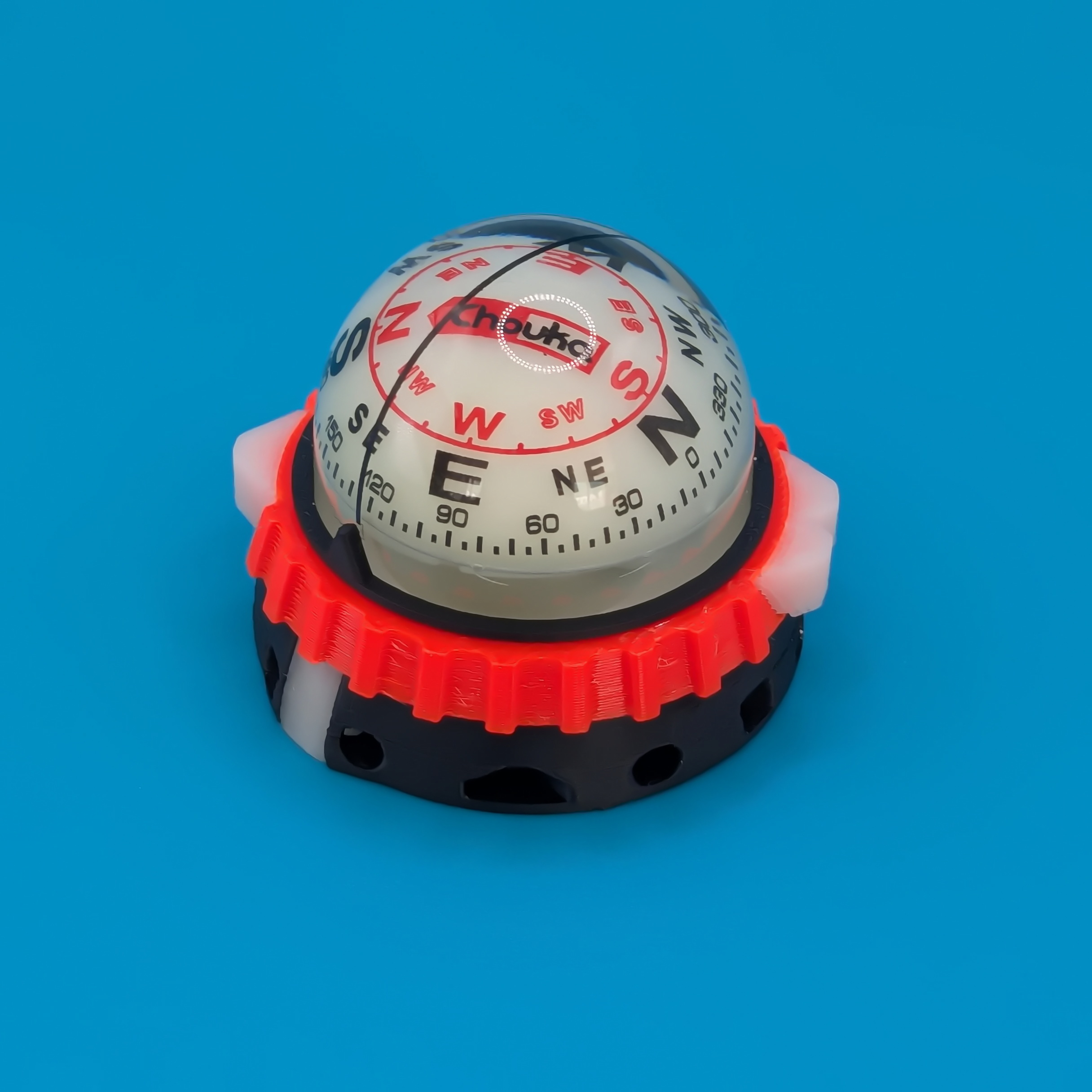
Compact, robust, and reliable diving compass for underwater navigation during scuba diving, freediving, cave diving, technical diving, and DPV (diver propulsion vehicle) use. Spherical capsule stabilized in an oil bath, easy to read even when tilted, with an adjustment bezel and phosphorescent markers to easily follow an outbound and return heading solo or with a buddy team.
It is made in France and designed for classic, technical, and cave diving.
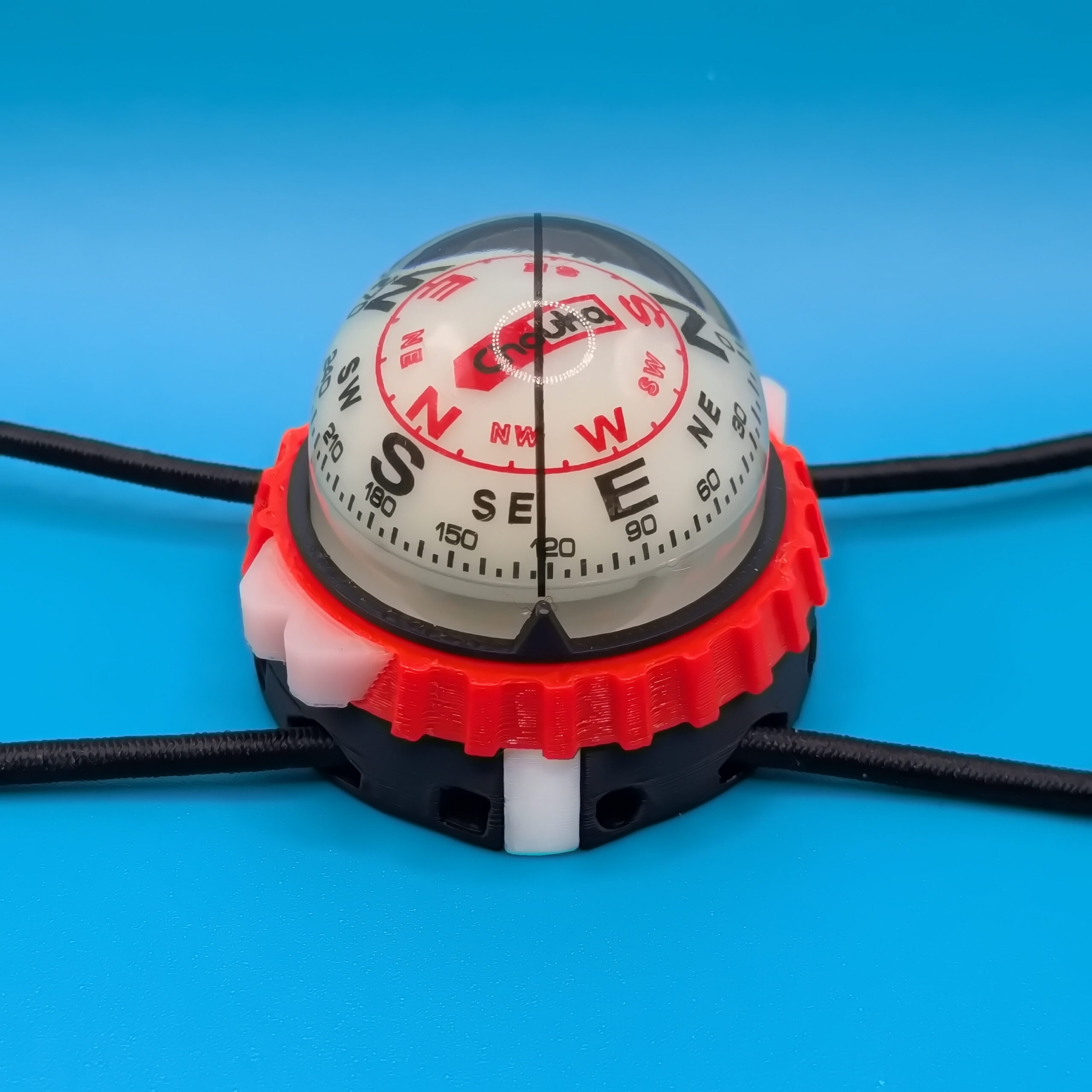
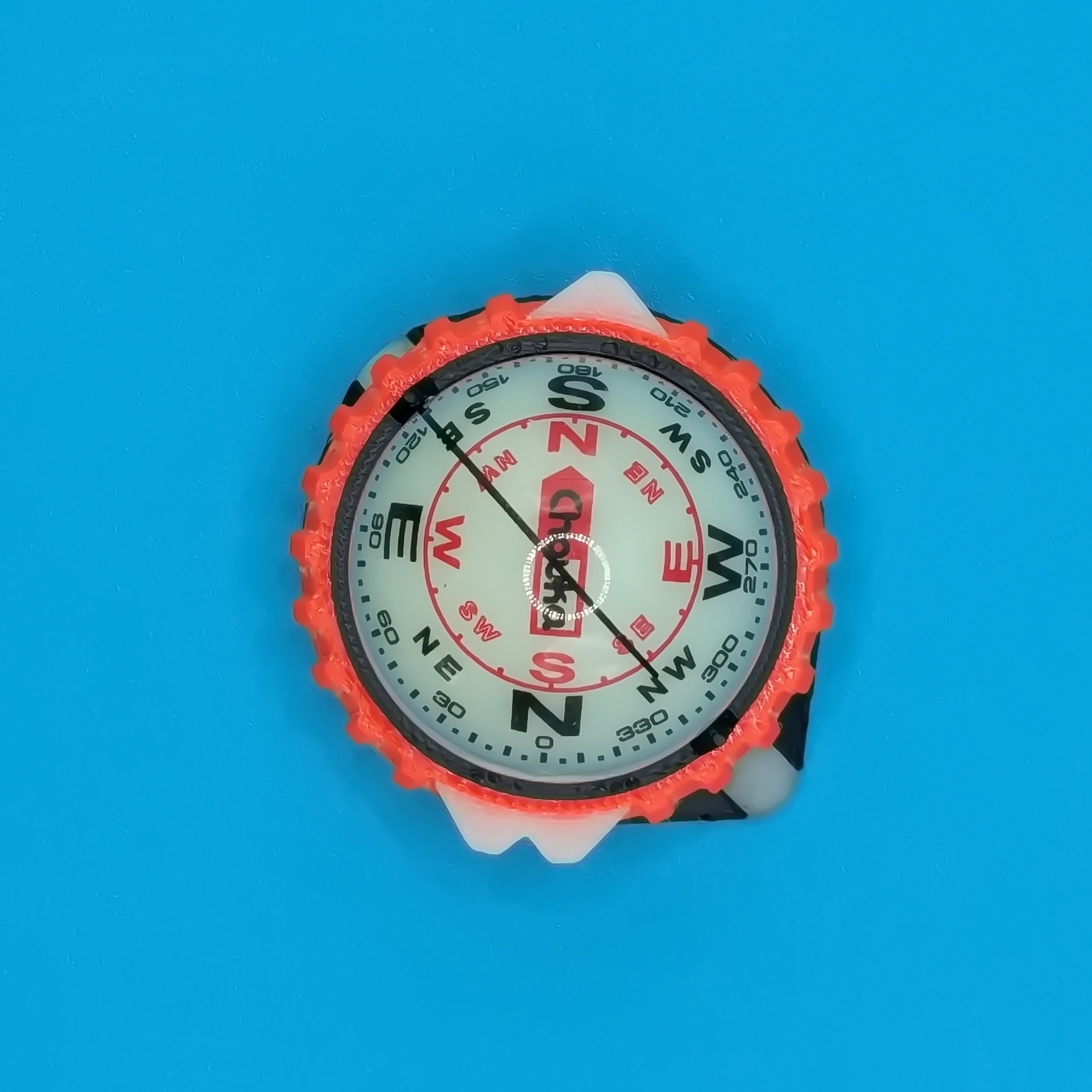
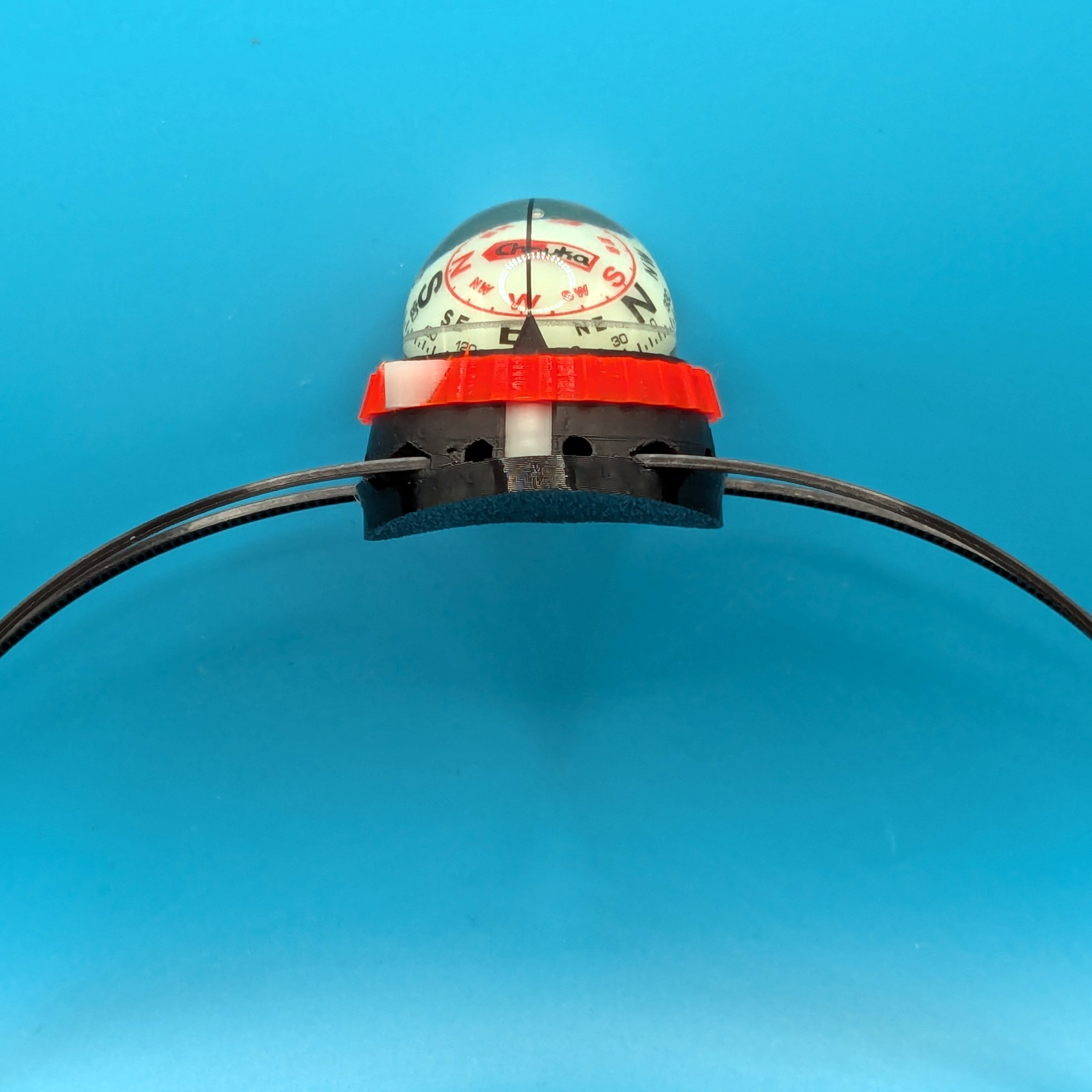
The Chouka diving compass consists of several components designed to provide accurate, intuitive, and easy-to-read underwater navigation. It includes the following elements:
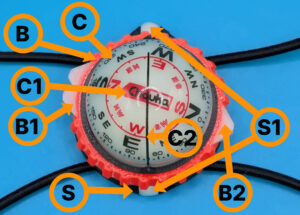
Compass components labeled below
(C) Graduated spherical capsule (from 0 to 360° in 5° increments):
The spherical capsule is the moving part of the compass. It floats in an oil bath to align naturally with magnetic North while ensuring fluid and stable rotation.
It includes:
(C1) a North arrow pointing to magnetic North;
red graduations on top of the capsule corresponding to a classic compass reading with cardinal points;
black graduations around the perimeter corresponding to a nautical compass style reading used in maritime and aviation navigation for a precise heading reading from the rear of the capsule;
(C2) a fixed black reference line at the rear of the compass allowing you to take a heading.
(S) Black base with phosphorescent direction markers
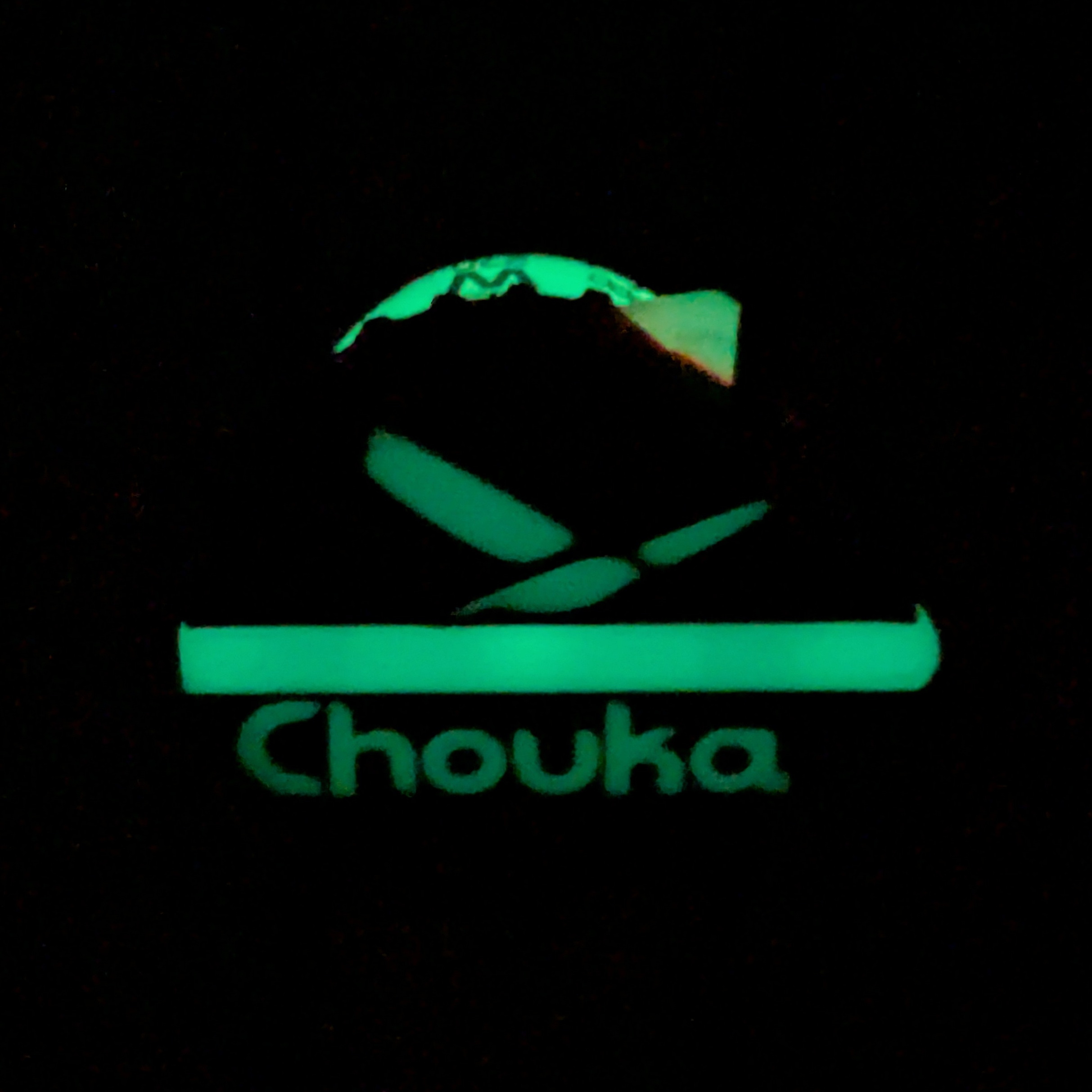
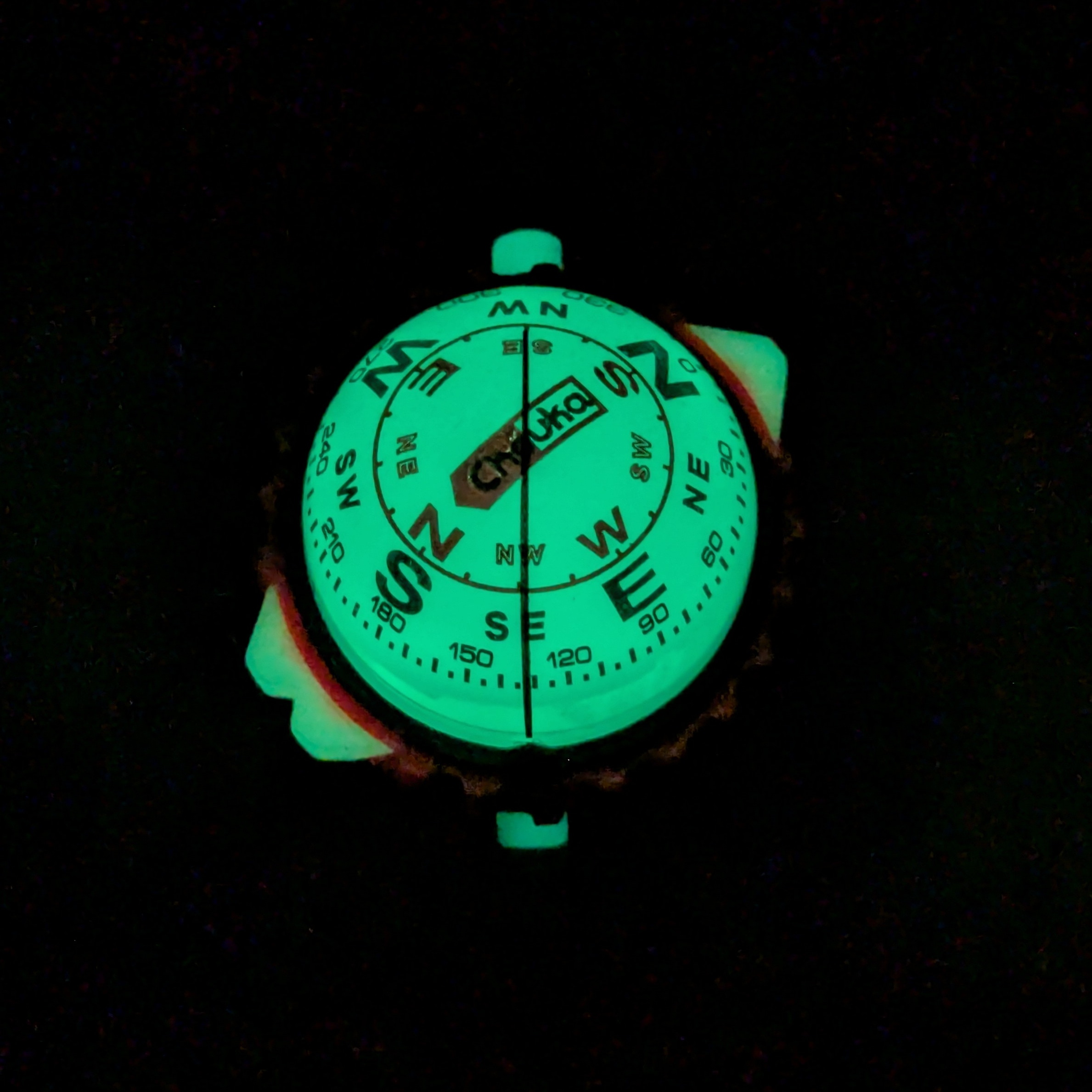
(S1)White phosphorescent direction markers on the front and rear of the fixed part of the compass indicate the direction to follow during underwater navigation and make it easier to align the heading with your wrist, even in low visibility.
(B) Red adjustment bezel with white phosphorescent markers: the red rotating bezel makes it easy to set and memorize a navigation heading to follow it.
It includes:
(B1)a double white notch serving as a marker for the outbound heading;
(B2) a single white marker (opposite the double notch) to automatically follow the return heading.
The phosphorescent markers ensure good legibility underwater. Thanks to its spherical design, reading remains possible even when the compass is tilted. It also provides a natural visual reference for the horizontal underwater.
Technical specifications
Oil-bath stabilized spherical capsule
Graduation: 0° to 360°, 5° increments
Weight: 30 g
Dimensions:
Capsule diameter: 32 mm
Height: 33 mm
Length: 46 mm
Width: 40 mm
Depth tested to 100m (11 bar)
High-contrast phosphorescent markers
Easy reading even when tilted
Visual reference for the horizontal
Wrist, hand, or scooter attachment (optional DPV adapter)
Use & navigation
Setting a Visual Heading Before or During a Dive
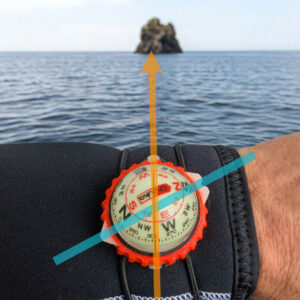
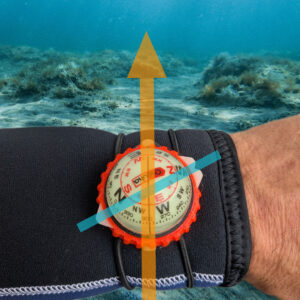
Point the base markers (S1) and the capsule’s black reference line (C2) toward the target point or direction to follow (orange arrow).
Turn the red adjustment bezel (B) until the white notch (B1) is aligned around the North arrow (C1) on the capsule (blue line).
Your heading is now memorized and ready to be followed underwater.
Aiming a heading and aligning the bezel
Setting a Numerical Heading
Example: 295° heading.
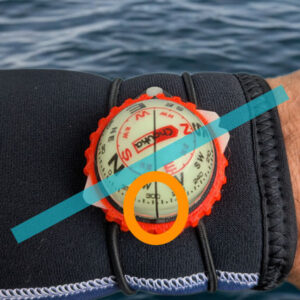
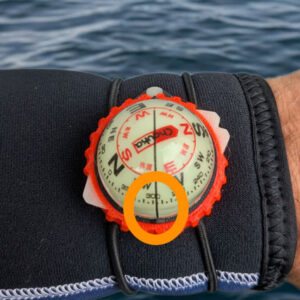
Orient the compass until 295° is aligned with the black reference line (C2) of the capsule (and with the rear of the base marker (S1)) (orange circle).
Then turn the red adjustment bezel (B) to align the white notch (B1) with the North arrow(C1) on the capsule (blue line).
The 295° heading is now saved.
Setting a numerical heading
Following the Set Heading
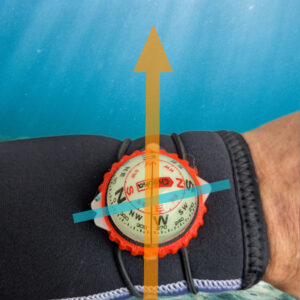
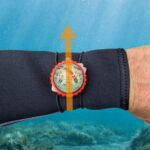
Outbound: simply keep the North arrow (C1) aligned with the white notch(B1) on the red bezel (blue line) while swimming in the direction indicated by the base markers (S1) (and the black reference line (C2)) (orange arrow).
Following a heading underwater (outbound)
Return: to automatically follow the reciprocal heading, align the North arrow (C1) with the single white marker (B2) located opposite the white notch (blue line).
This feature allows you to easily find your starting point without mental math.
Following a return heading underwater (return)
Accurate Heading Reading
Aim toward the heading to be measured using the white direction markers (S1) on the base.
Then accurately read the numerical heading at the rear of the capsule using the black reference line (C2) (orange circle).
Reading a heading
Practical and versatile mounting
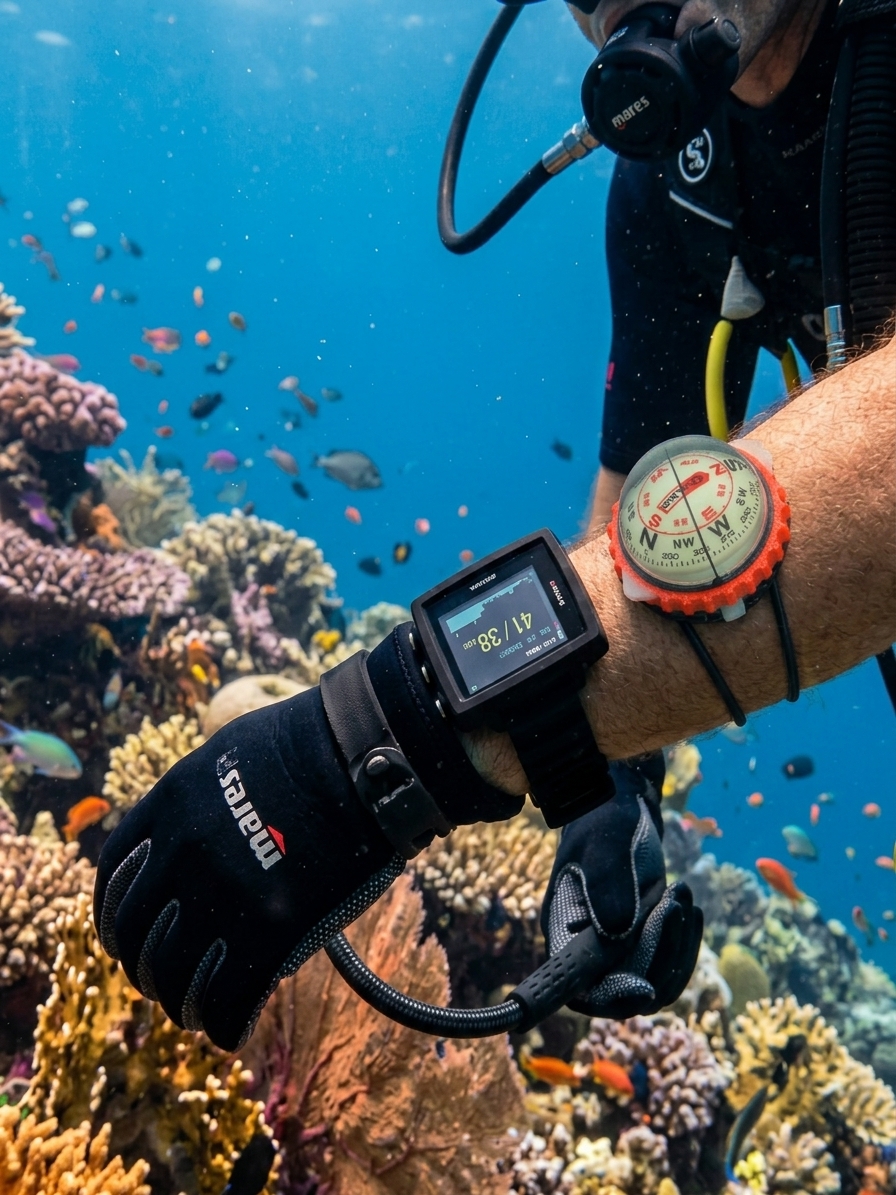
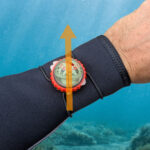
On the wrist or hand
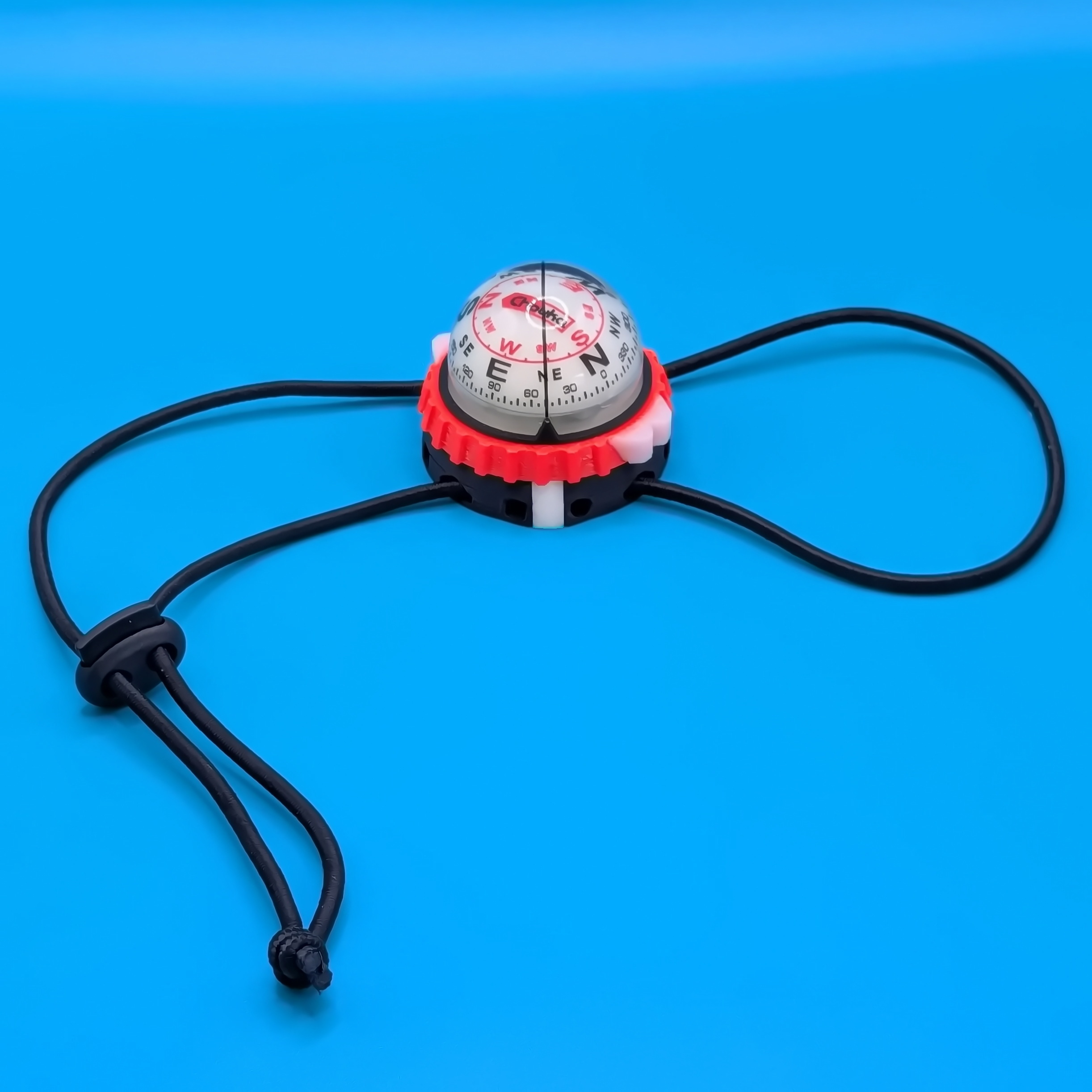
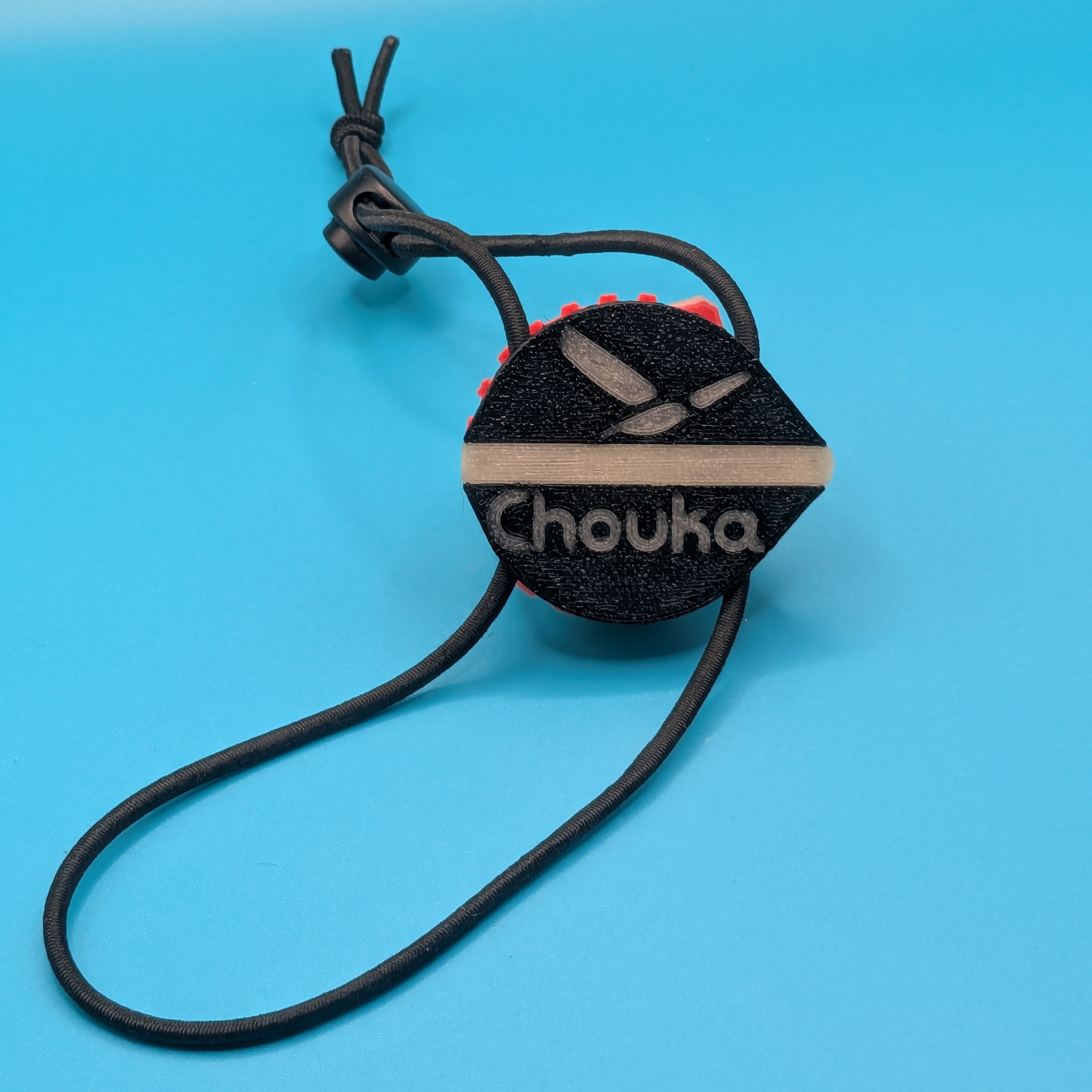
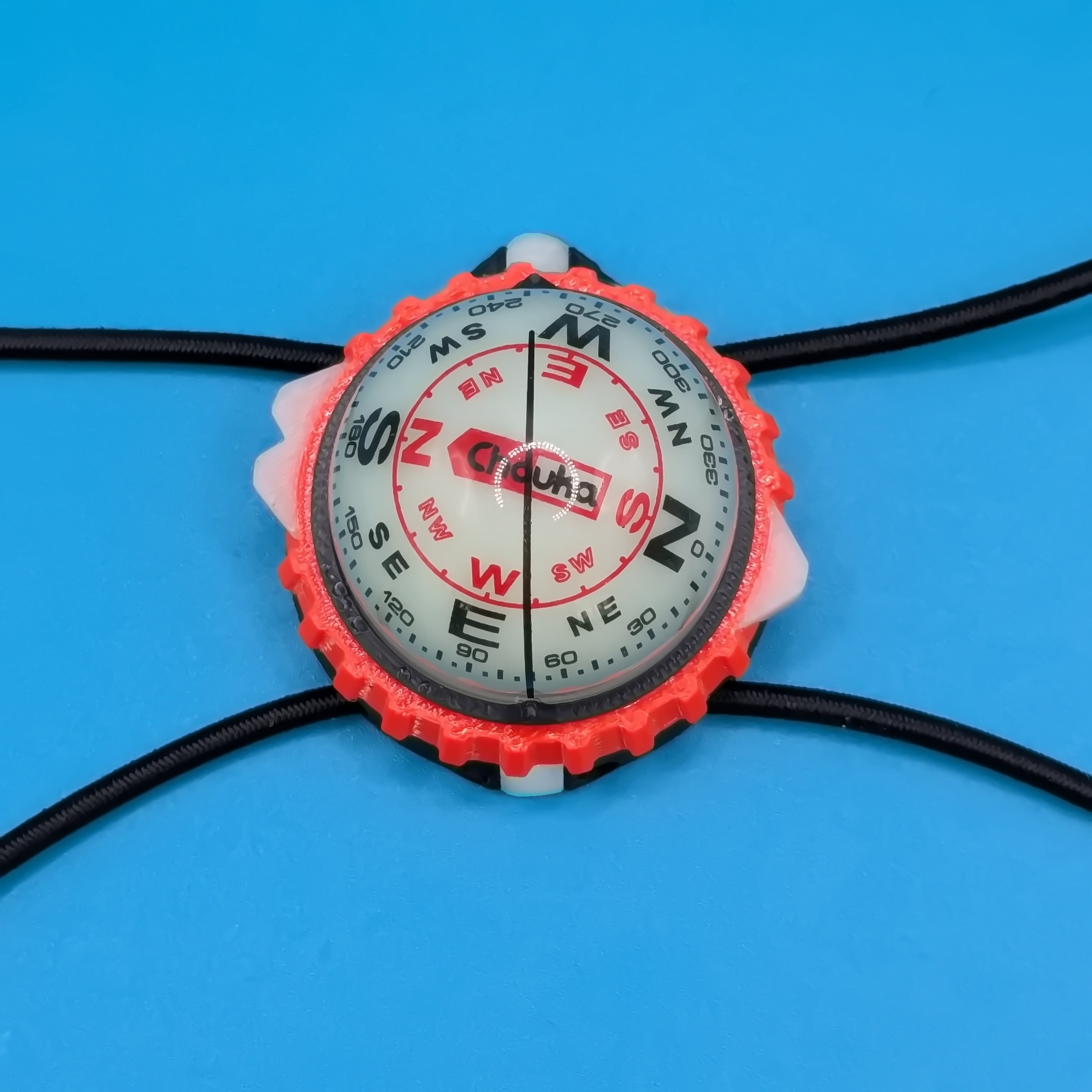
The Chouka compass is attached to the wrist or hand with an adjustable bungee cord, allowing for quick and secure adjustment, even with diving gloves.
The elasticity of the cord also naturally compensates for wetsuit compression underwater, ensuring a comfortable fit throughout the entire dive.
Depending on the diver’s preference, several mounting positions are possible:
reading with arm at a right angle (standard);
reading with left arm at 45°;
reading with right arm at 45°.
Left arm mounting at 90°
Left arm mounting at 45°
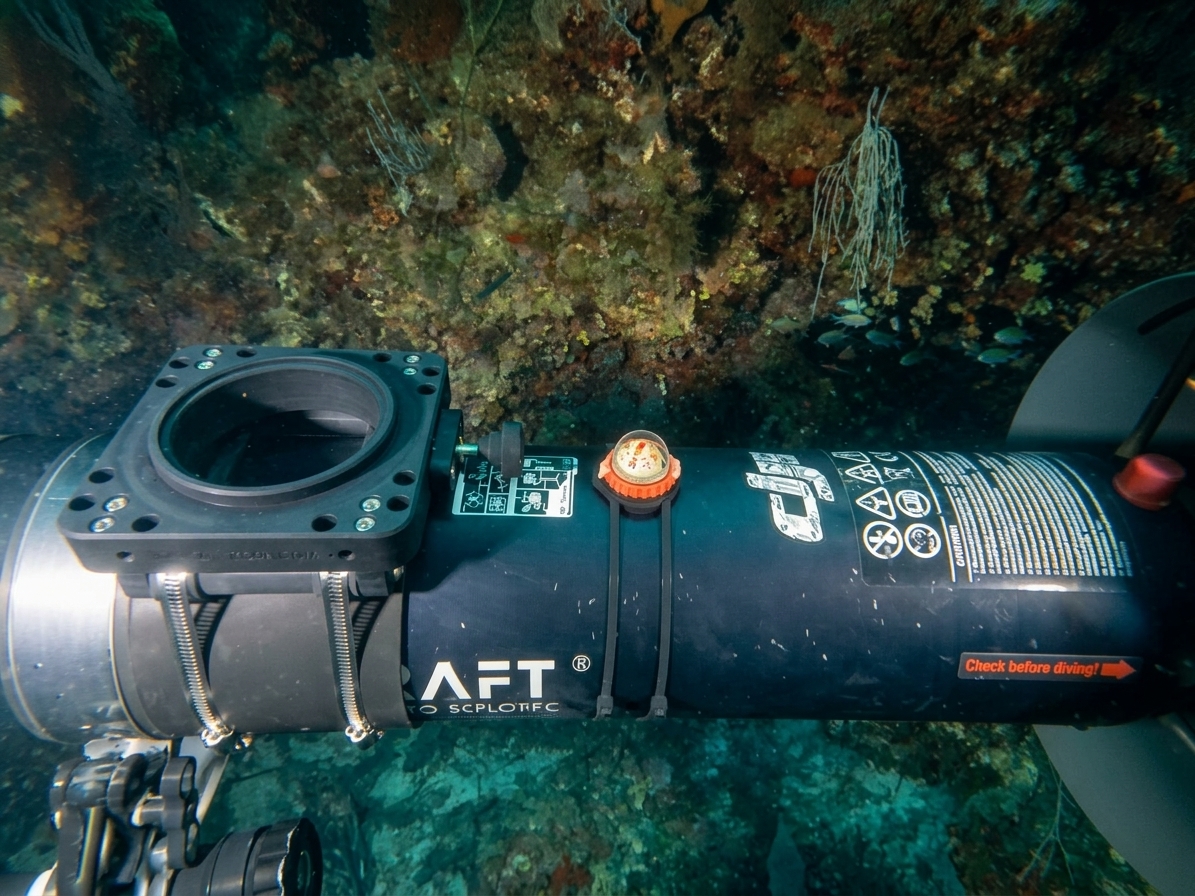
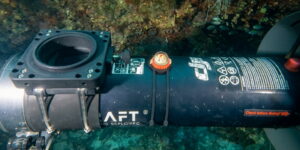
On underwater scooter (DPV)
The compass can also be mounted on an underwater scooter thanks to an optionally available adapter.
Compass on DPV
Maintenance & safety notes
Rinse thoroughly with fresh water after each dive.
Avoid impacts and store away from excessive heat.
Regularly check that the spherical capsule rotates freely and that the graduations remain legible.
The compass is a navigation aid, but diving safety must never rely solely on its use. It is not a safety instrument. Dive planning, gas management, site knowledge, the use of complementary instruments, and adherence to safety procedures take priority.
The compass has been tested to a pressure of 11 bar (100 m depth). Using it for deeper dives is done at your own risk.
Keep out of reach of children. If the compass were to break, it contains mineral oil that may be toxic if ingested.


Reviews
There are no reviews yet